 The
main office has a conventional roof with blown insulation in the
attic space. Two types of insulation are being compared for both
performance comparison and to help illustrate how the roof insulation
works over the wide range of temperature conditions common to
the Interior (+90F to -60F). Thermo-Kool
and Johns Manville both have
provided insulation products, which were installed to meet a R-60
thermal insulation rating. Temperature and relative humidity sensors
were installed to see the environmental conditions from just under
the outer 30 lb roofing felt to the inside of the 5/8” ceiling
sheet rock. The vapor barrier is installed just above the ceiling
sheet rock. The attic space is vented through a steel soffit.
The
main office has a conventional roof with blown insulation in the
attic space. Two types of insulation are being compared for both
performance comparison and to help illustrate how the roof insulation
works over the wide range of temperature conditions common to
the Interior (+90F to -60F). Thermo-Kool
and Johns Manville both have
provided insulation products, which were installed to meet a R-60
thermal insulation rating. Temperature and relative humidity sensors
were installed to see the environmental conditions from just under
the outer 30 lb roofing felt to the inside of the 5/8” ceiling
sheet rock. The vapor barrier is installed just above the ceiling
sheet rock. The attic space is vented through a steel soffit.
 |
 |
|
|

 |
|
|
|
 |
 |
 |
|
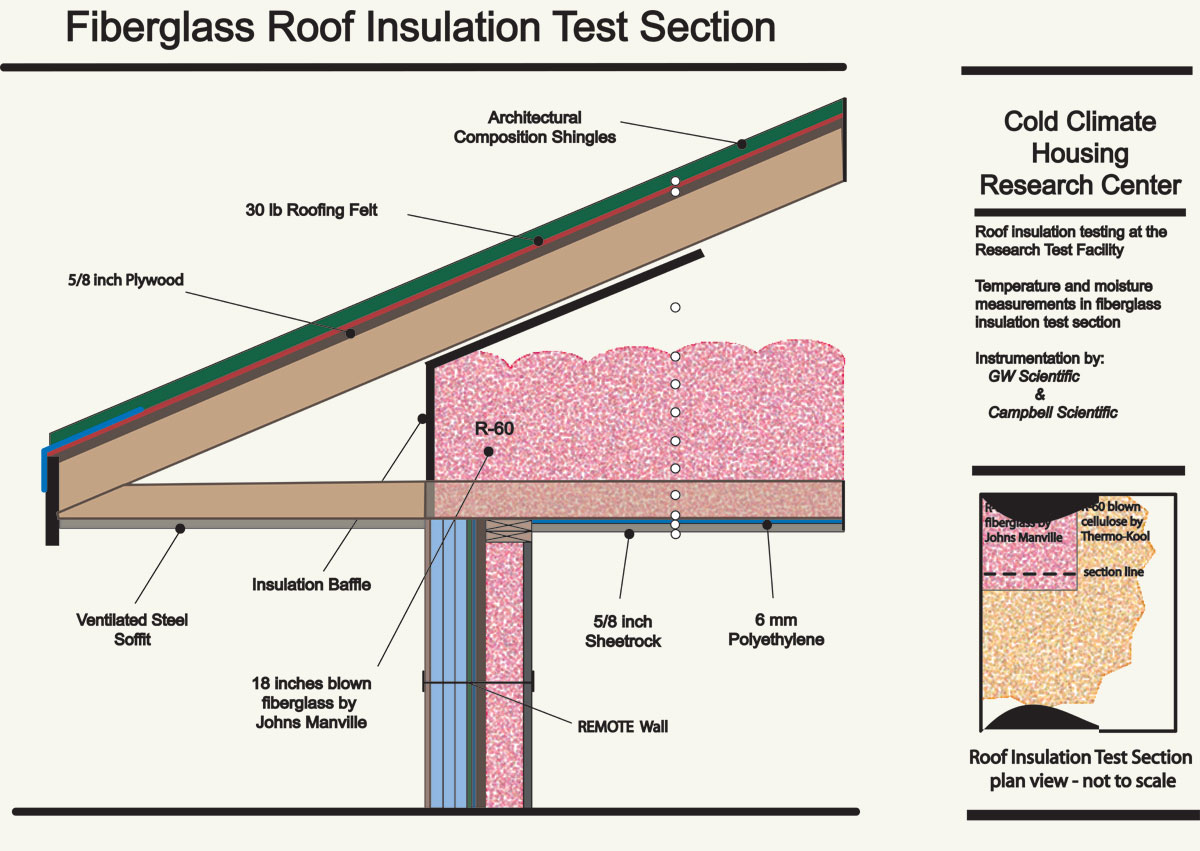
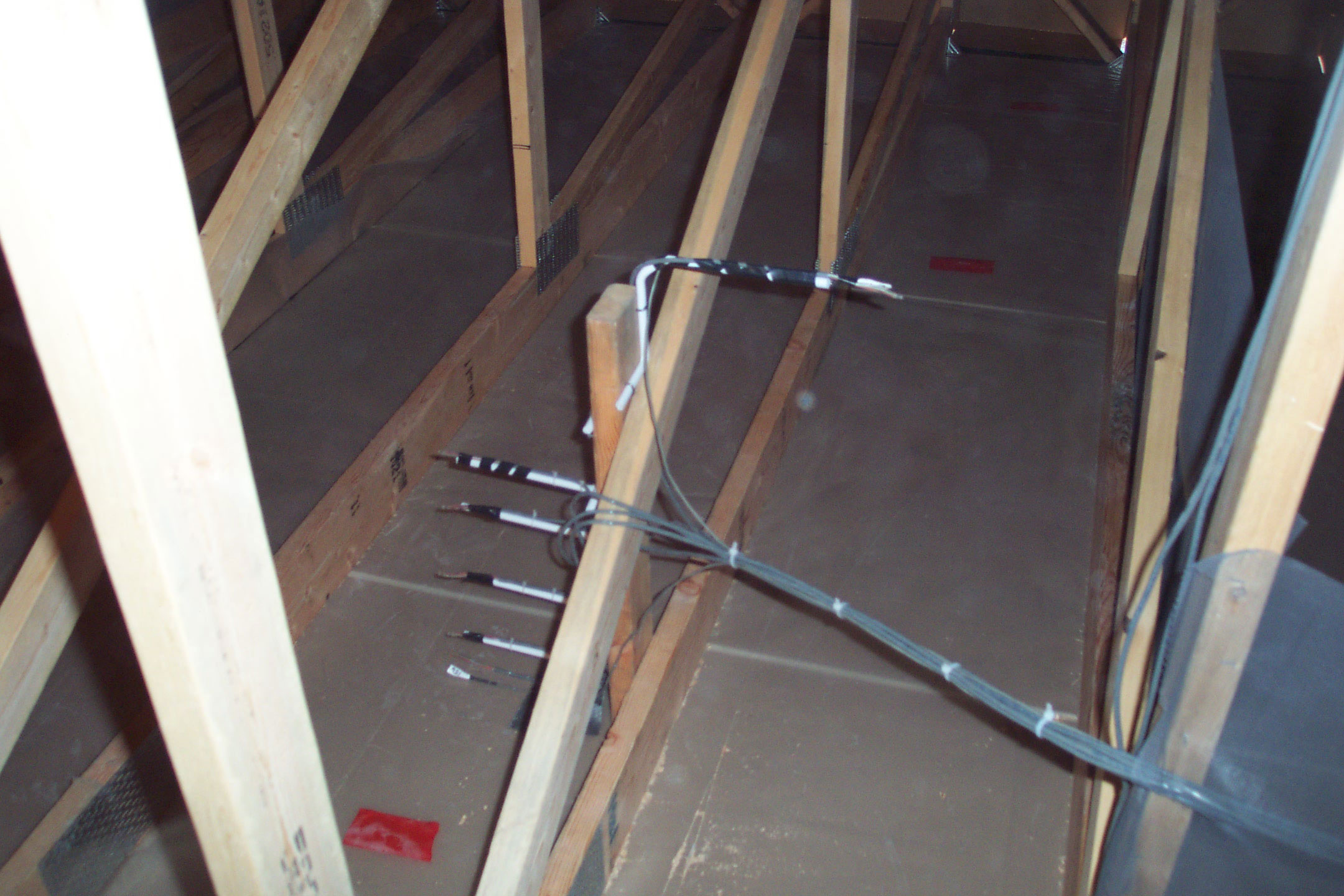
Temperature and Relative Humidity Sensors
in Fiberglass Insulation area.
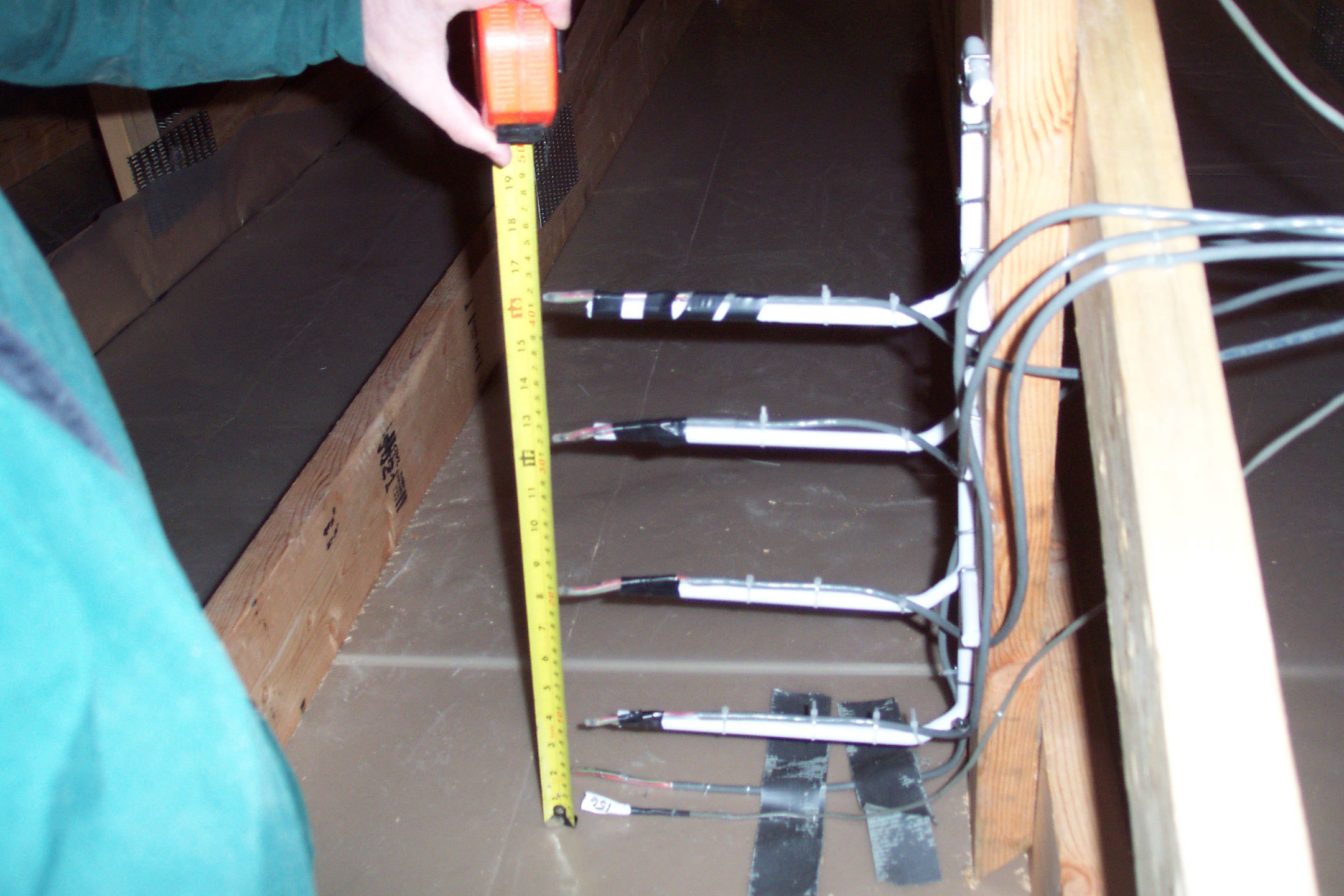
|
Multiple sensors used to measure profiles
through the insulation
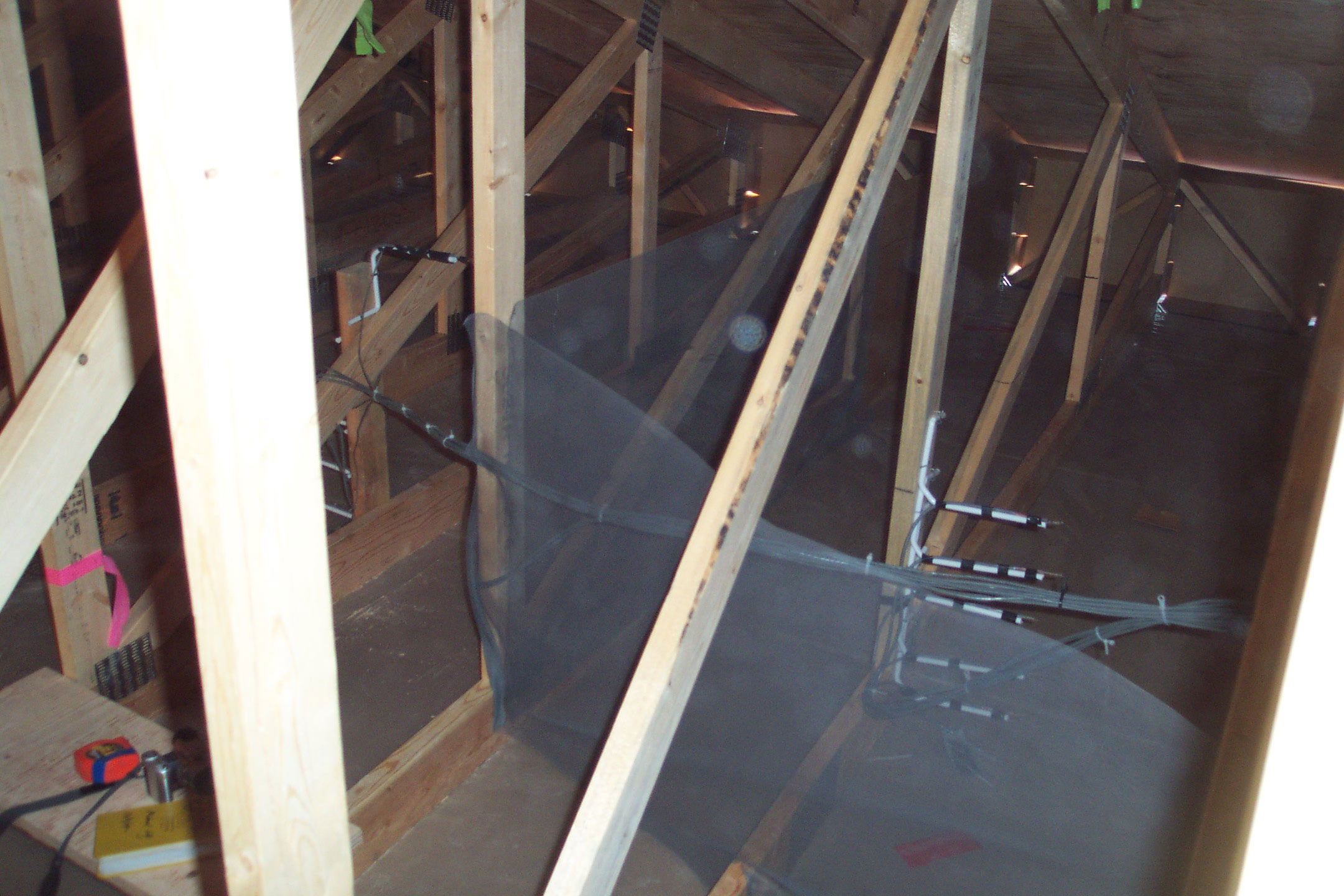
|
Wire screen mesh used to separate insulation
types
|
 |
||
|
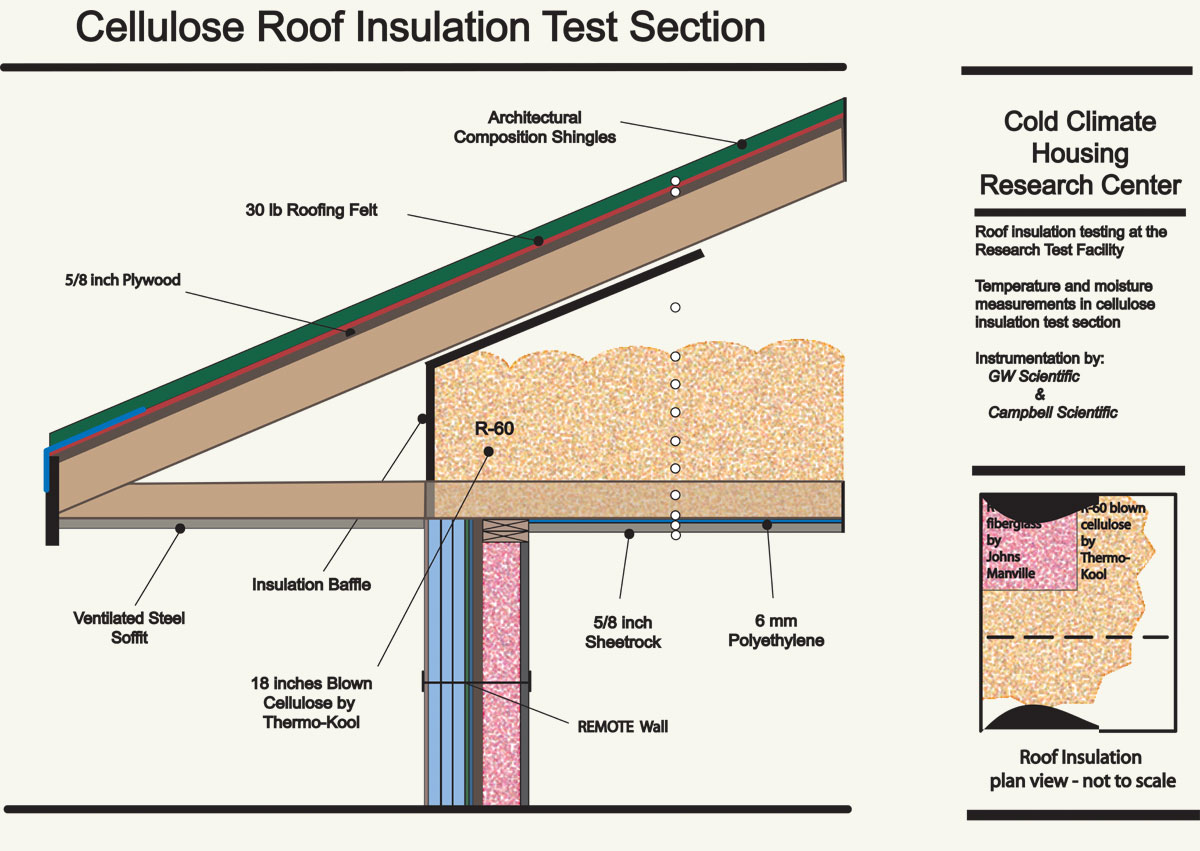
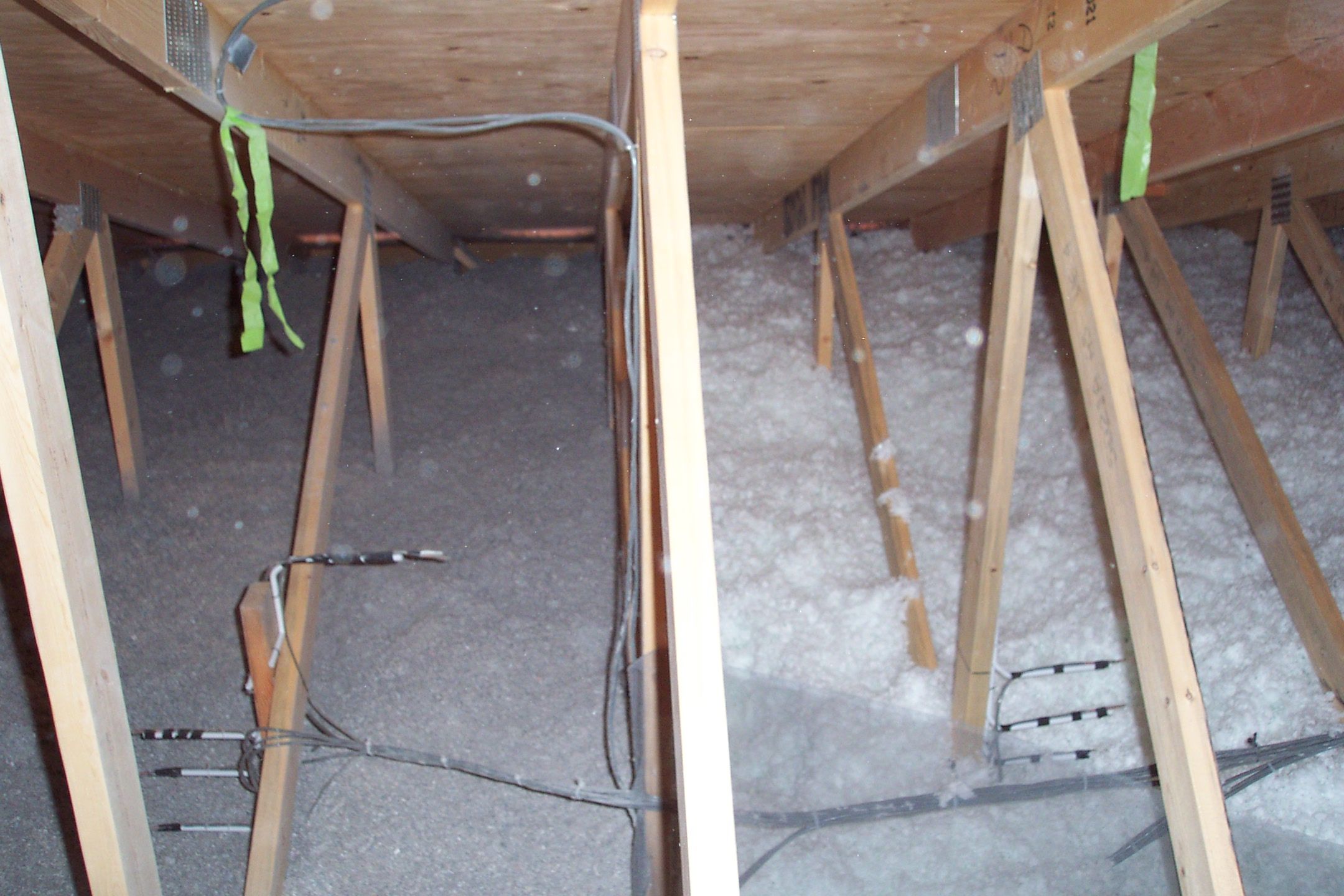
Cellulose (left) insulation and fiberglass
(right) insulation after
partial installation |
